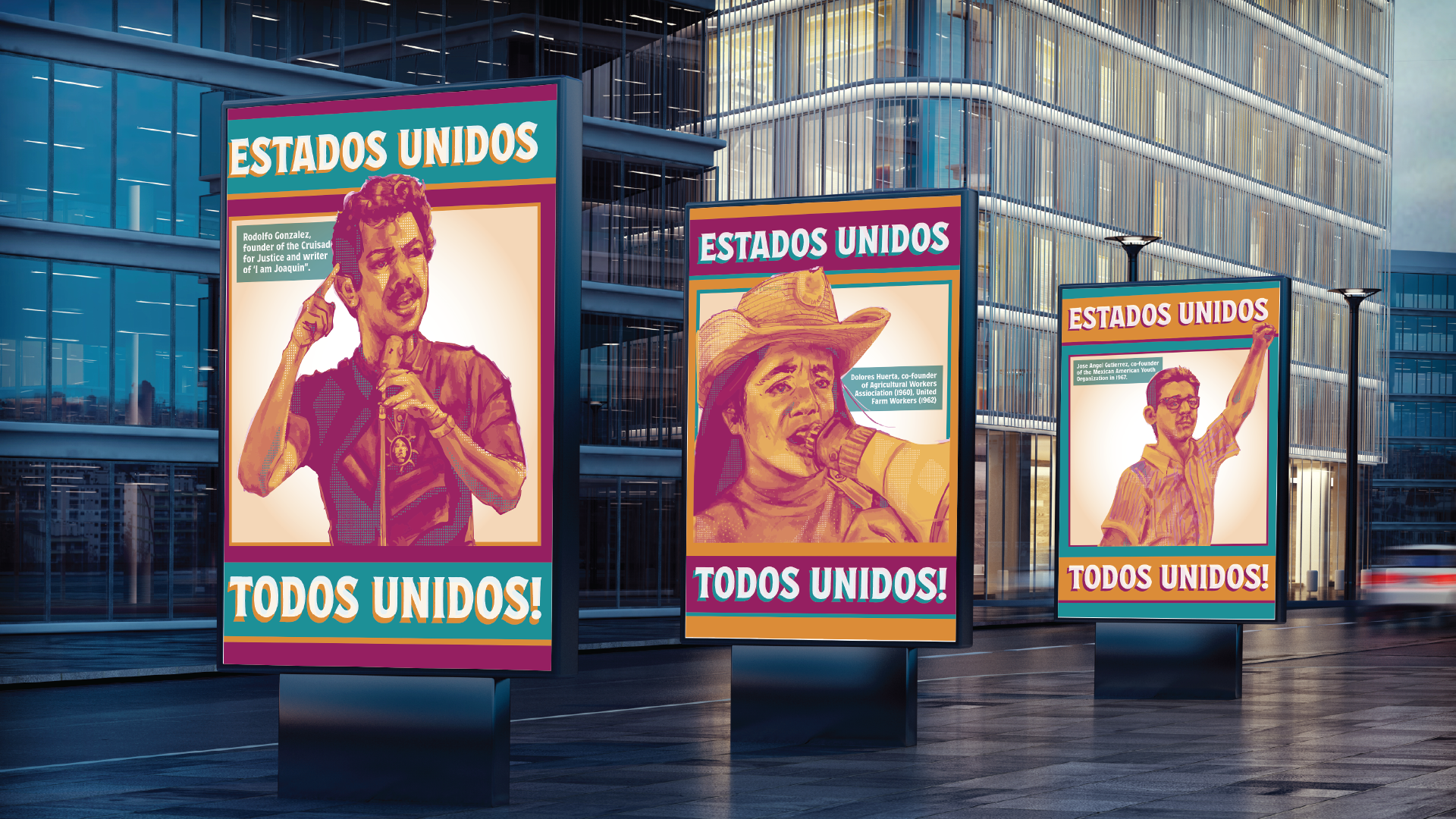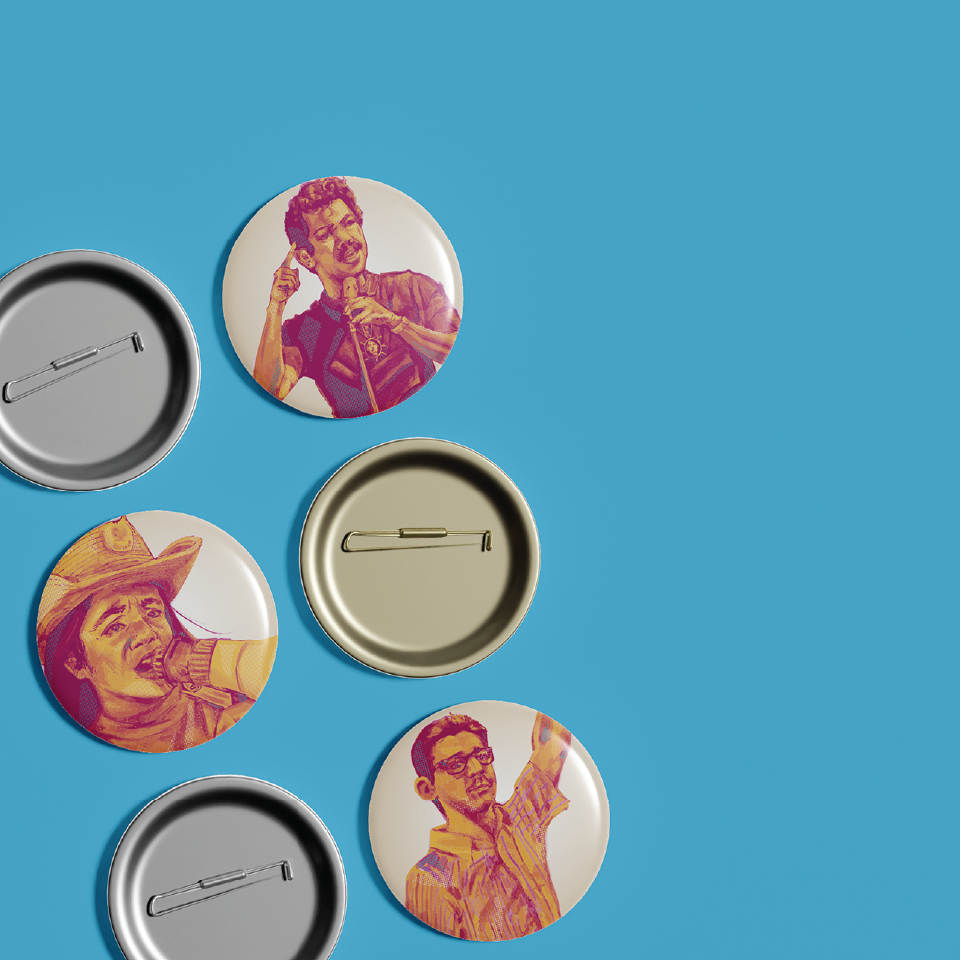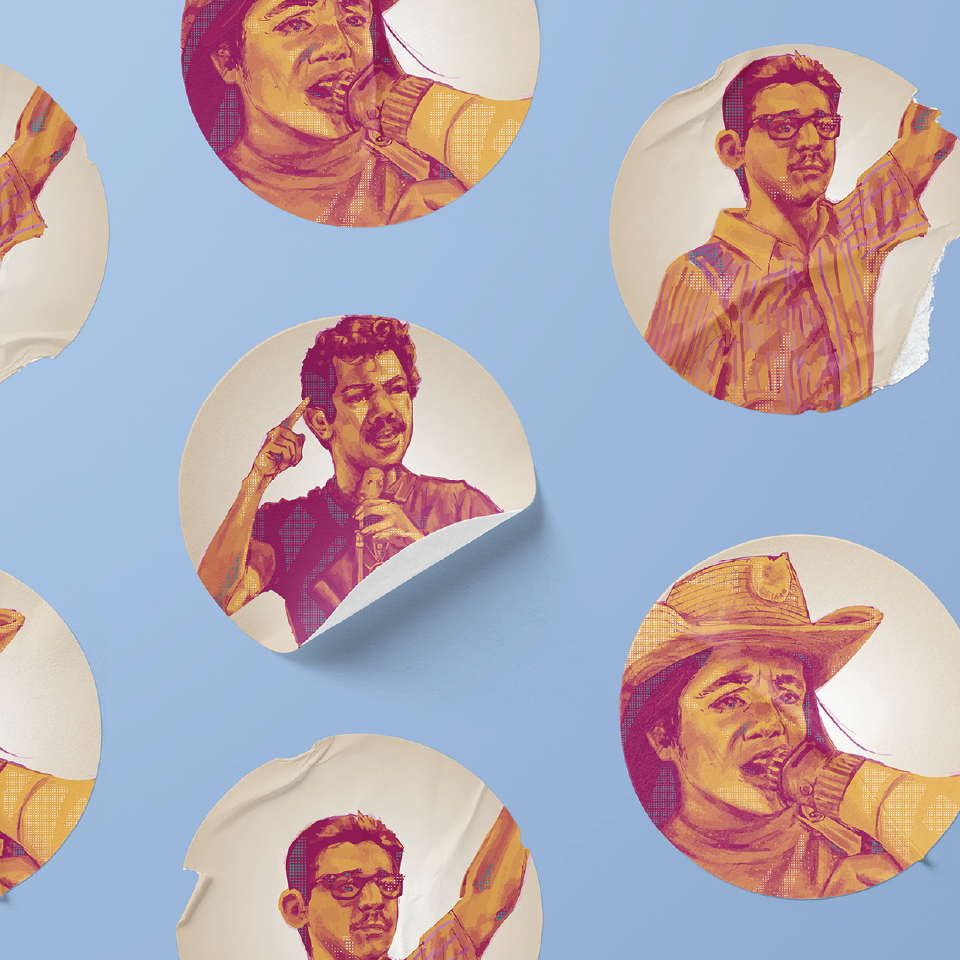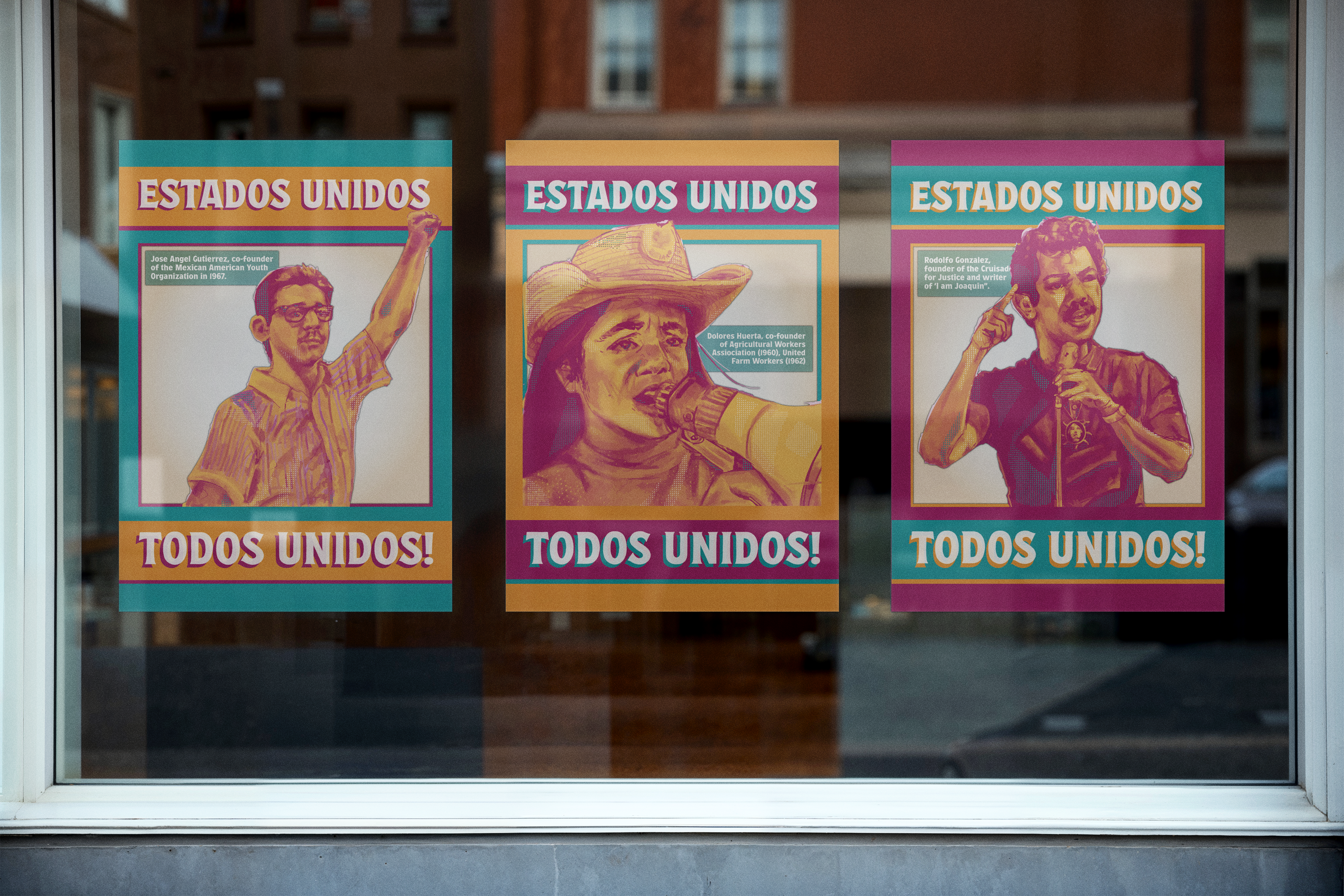
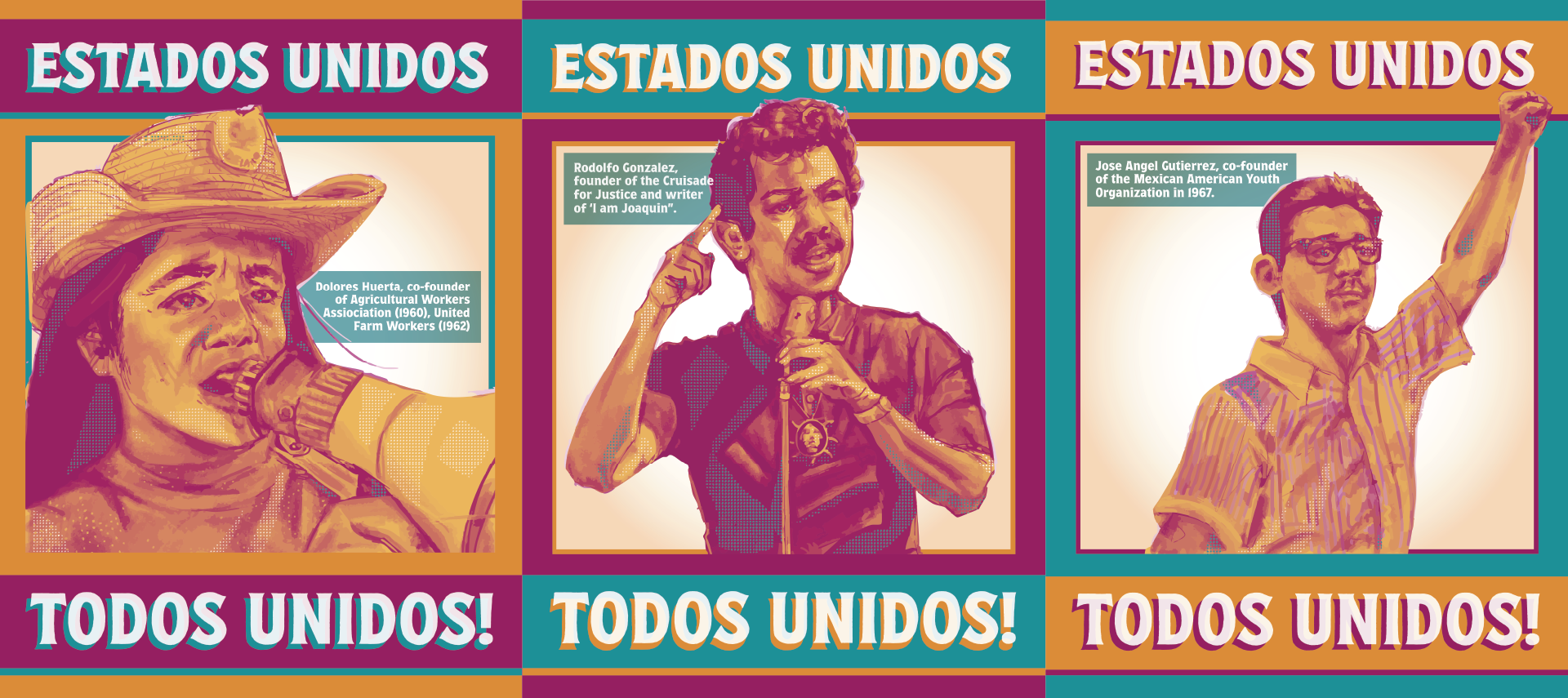
Featuring well-known Chicano movement figures like Rodolfo González, José Ángel Gutiérrez, and Dolores Huerta to create a familiar, relatable connection.
Incorporating symbols, colors, and imagery that reflect Hispanic heritage and identity to strengthen engagement.
Designing posters that are easy to read, eye-catching, and strategically placed where the audience naturally sees them
Highlighting stories and faces that motivate pride and action, encouraging the community to participate in voting.
My solution was to design a series of posters featuring influential figures from the Chicano Movement—Rodolfo “Corky” Gonzales, José Ángel Gutiérrez, and Dolores Huerta—to create voting materials that feel culturally relevant and empowering.
By grounding the visuals in recognizable leaders who represent activism, resilience, and collective pride, the posters aim to bridge the emotional and informational gap identified in my research. The goal is to turn civic reminders into cultural touchpoints, using representation and visibility as tools to strengthen voter engagement in Hispanic communities.

HEADER
Espiritu Regular
The interview with my grandfather revealed how deeply personal history can shape civic participation, particularly for immigrants who experienced political instability in their countries of origin. As a Cuban immigrant, his views on voting are strongly informed by a lived understanding of governmental change, loss of rights, and the importance of individual political agency. This context helps explain why he approaches American politics with such conviction and why he views voting not just as a right but as a responsibility.
Throughout the interview, his responses often drifted into personal political opinions, which required me to guide the conversation back toward broader, more neutral themes relevant to my poster’s goals. However, even when his answers became heavily opinionated, they still offered valuable insight into how political identity is shaped by immigration experiences and generational differences. His emphasis on the symbolic power of visual elements, specifically, using the multiple colors present in national flags aligned with common findings in political communication research, where familiar symbols increase emotional resonance and recognition. His idea of placing posters along high-visibility roads also reflects established strategies in community-based outreach, demonstrating an intuitive understanding of message placement and public engagement.
One of the most significant moments in the interview was his story about receiving his Pennsylvania ballot three days after the election had already ended. This experience highlights a real, documented issue in the U.S.—administrative barriers and systemic inconsistencies that can prevent eligible voters from participating. Hearing how this affected someone as punctual and civically committed as my grandpa underscored the seriousness of voter access obstacles, especially for older adults or people navigating out-of-state voting processes.
Overall, nothing he shared surprised me given our close relationship and his well-known strong opinions. Still, the interview reinforced the complexity of designing political messaging that appeals across ages and backgrounds. Moving forward, I’ll need to think more intentionally about how to integrate his insights, especially the emotional weight he places on voting and symbolism into a poster that communicates clearly and inclusively to a wide audience.
View full transcriptCésar’s interview reflected how generational perspective and lived experience shape a person’s understanding of civic participation, similar to what emerged in my conversation with my grandfather. While my grandpa’s insights were deeply tied to immigration, political instability, and the urgency of voting rights, César’s responses revealed a more contemporary, community-centered view of civic engagement. Instead of focusing on political history, he approached the topic through everyday accessibility, emphasizing how design, visibility, and clarity can help people feel closer to civic issues. This contrast highlights how both interviews—though different in tone—underscore the importance of meeting people where they are.
Throughout César’s interview, he maintained a consistent focus on accessibility and public understanding. Where my grandfather often drifted into strongly held political opinions, César tended to prioritize practical explanations and concrete examples. He framed civic communication as something that should reduce confusion rather than contribute to it. This difference reveals how individuals’ backgrounds shape their communication priorities: while my grandfather sees voting as an emotionally charged responsibility rooted in memory and loss, César frames it as a logistical, community-based process that can be improved through clear information design.
César also shared several ideas aligned with research on political communication, particularly the value of visual hierarchy, simple messaging, and placing information in everyday public spaces. His thoughts mirrored, in a more structured way, my grandfather’s instinctive point about poster visibility. While my grandpa intuitively suggested placing posters along high-traffic roads, César articulated a design-based rationale for visibility—focusing on line of sight, color usage, and the importance of reaching people in environments they already navigate. Both interviews, in different ways, reinforced the significance of visual strategy in civic outreach.
Finally, César’s interview helped contextualize my grandfather’s experiences by emphasizing the structural, rather than personal, barriers within voting systems and civic communication. While my grandpa’s story of receiving his Pennsylvania ballot too late highlighted how real individuals are harmed by administrative failures, César emphasized how design choices can prevent misunderstandings and reduce friction. Together, their perspectives illustrate a full picture: the emotional and historical weight of voting for individuals like my grandfather, and the practical, design-centered approaches advocated by people like César. Integrating both viewpoints will help me create a poster that communicates across backgrounds, generations, and lived experiences.
View full transcript